

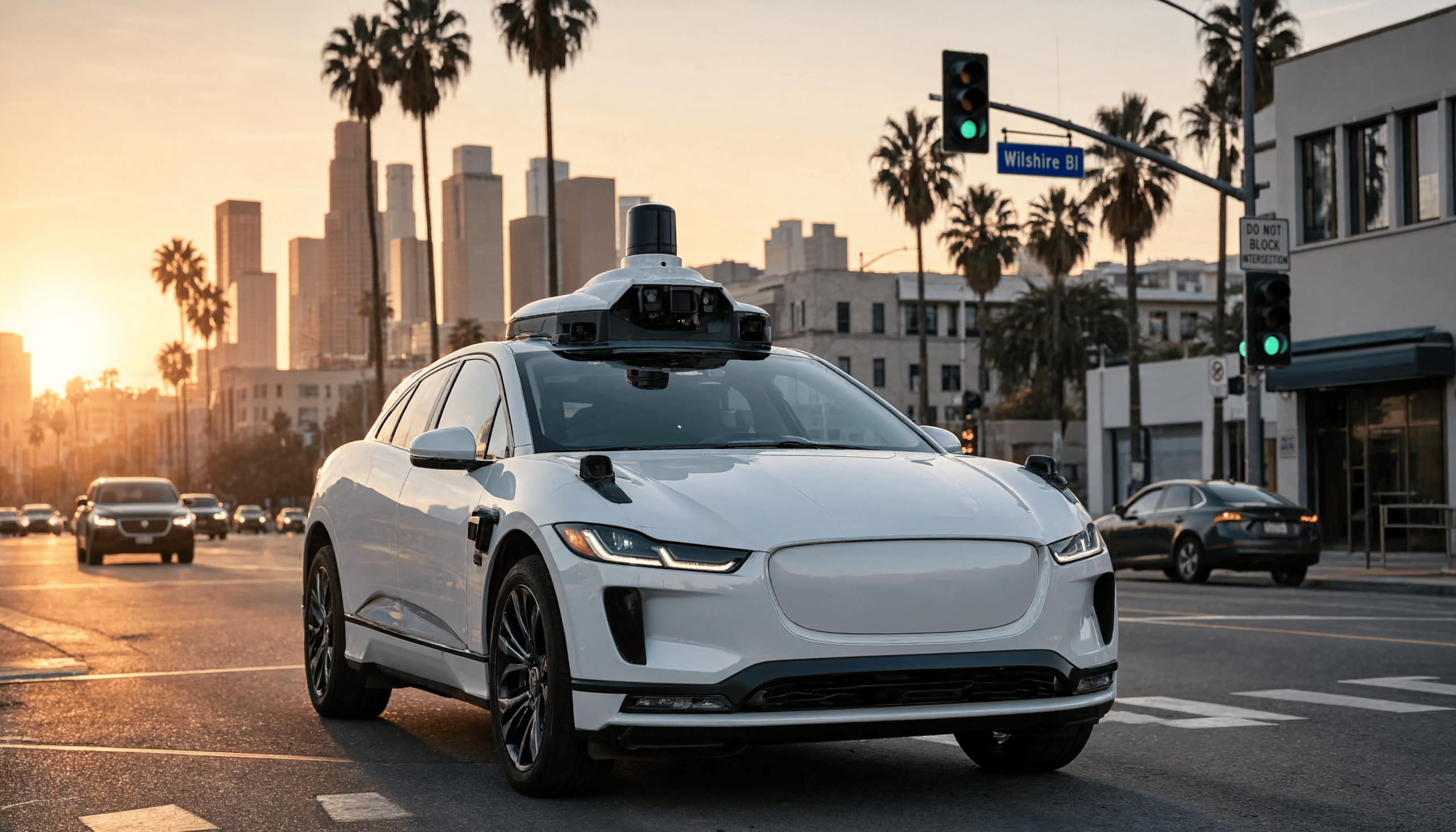
Driverless robotaxis are now a normal sight on Los Angeles streets. Waymo – the autonomous-vehicle company owned by Google’s parent, Alphabet – runs a paid, fully driverless service across large parts of the city. When one of these vehicles is involved in a crash, the question of who pays looks nothing like an ordinary car accident. Here is how liability works in California when there is no human behind the wheel.
Why a robotaxi crash is different
In a typical collision, you exchange information with the other driver and file against that driver’s insurance. A robotaxi has no driver at the scene, so the analysis shifts to the machine and the companies behind it. Fault usually moves to the vehicle’s owner-operator and the makers of its automated driving system — and often more than one company shares responsibility.
Who can be held responsible
Several parties may be on the hook. The operator (here, Waymo/Alphabet) can be liable if its self-driving system caused the crash. The vehicle manufacturer – Waymo’s fleet is built on cars from automakers such as Jaguar – may share blame for a mechanical defect like brakes or steering. A third-party maintenance contractor can be liable for poor upkeep, and another human driver can be partly at fault as well.
Product liability and negligence
Robotaxi cases typically run on two legal theories. Under California’s strict product-liability rule, the maker of a defective product – including defective software, sensors, or perception logic – can be held responsible without proof of ordinary carelessness. A negligence claim can also apply, for example when a company’s remote-monitoring team fails to intervene or a vehicle is poorly maintained.
California’s comparative-fault rule
California uses pure comparative negligence, so fault can be split among the company, other drivers, and even the injured person. Your compensation is reduced by your share of fault but not eliminated – even if you were partly responsible, you can still recover.
The evidence lives in the software
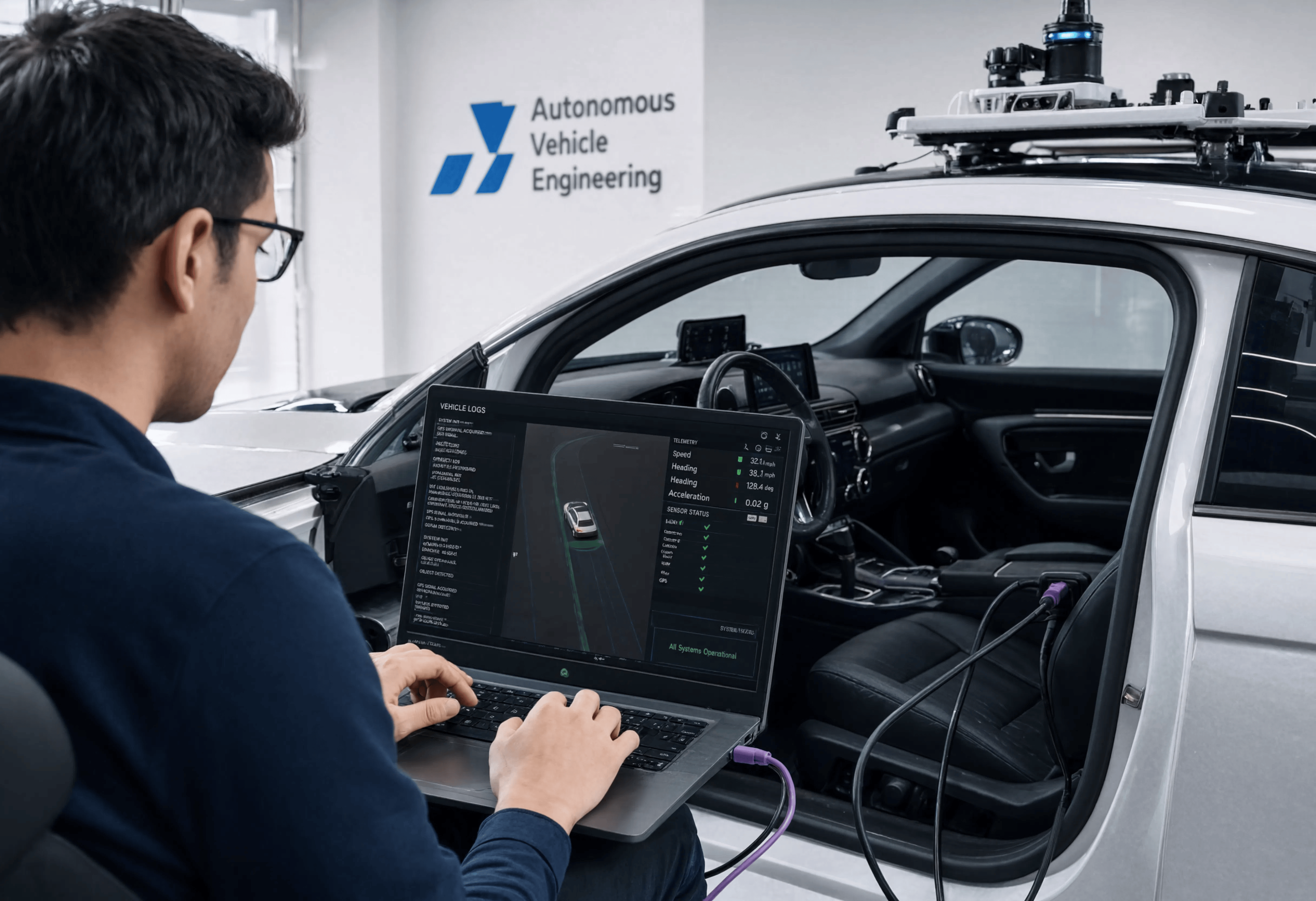
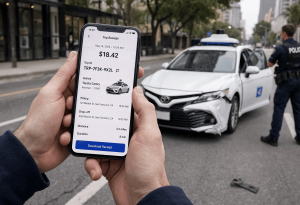
These cases turn on data most people never see – sensor readings, software logs, and the vehicle’s event recorder. That information can be overwritten quickly, so it must be preserved fast. If you were a passenger, screenshot the app and your trip details. Do not give a recorded statement to the company or its insurer before speaking with a lawyer.
How California regulates driverless cars
The California DMV licenses autonomous vehicles under separate testing and deployment permits and requires companies to report every collision involving property damage, injury, or death. In 2026 the state adopted its most comprehensive AV rules yet – letting law enforcement cite AV companies for their vehicles’ moving violations, requiring rapid responses to first responders, and giving regulators new tools to restrict fleets. Companies must also carry substantial insurance, which can mean far more coverage than an individual driver’s policy.
Deadlines and what your claim can include
In California you generally have two years to file an injury claim, and as little as six months if a public entity is involved – so act early. A successful claim can cover medical bills, future care, lost income and earning capacity, and pain and suffering. Because the defendant is often a large corporation, the available compensation can be significant, but the litigation is complex and evidence-intensive.
Helpful Resources & Links
 California DMV – Autonomous Vehicles Program
California DMV – New Autonomous Vehicle Regulations (2026)
California Courts – Civil Lawsuits (Self-Help)
Ellin Mardirosian Law – Commercial Truck Accidents (related reading)
Ellin Mardirosian Law – Practice Areas
Ellin Mardirosian Law – Free Consultation
Speak With Ellin Mardirosian Law
Injured? Your consultation is free and confidential. Call (747) 310-5200 – English, Spanish, and Armenian. No fee unless we win.