

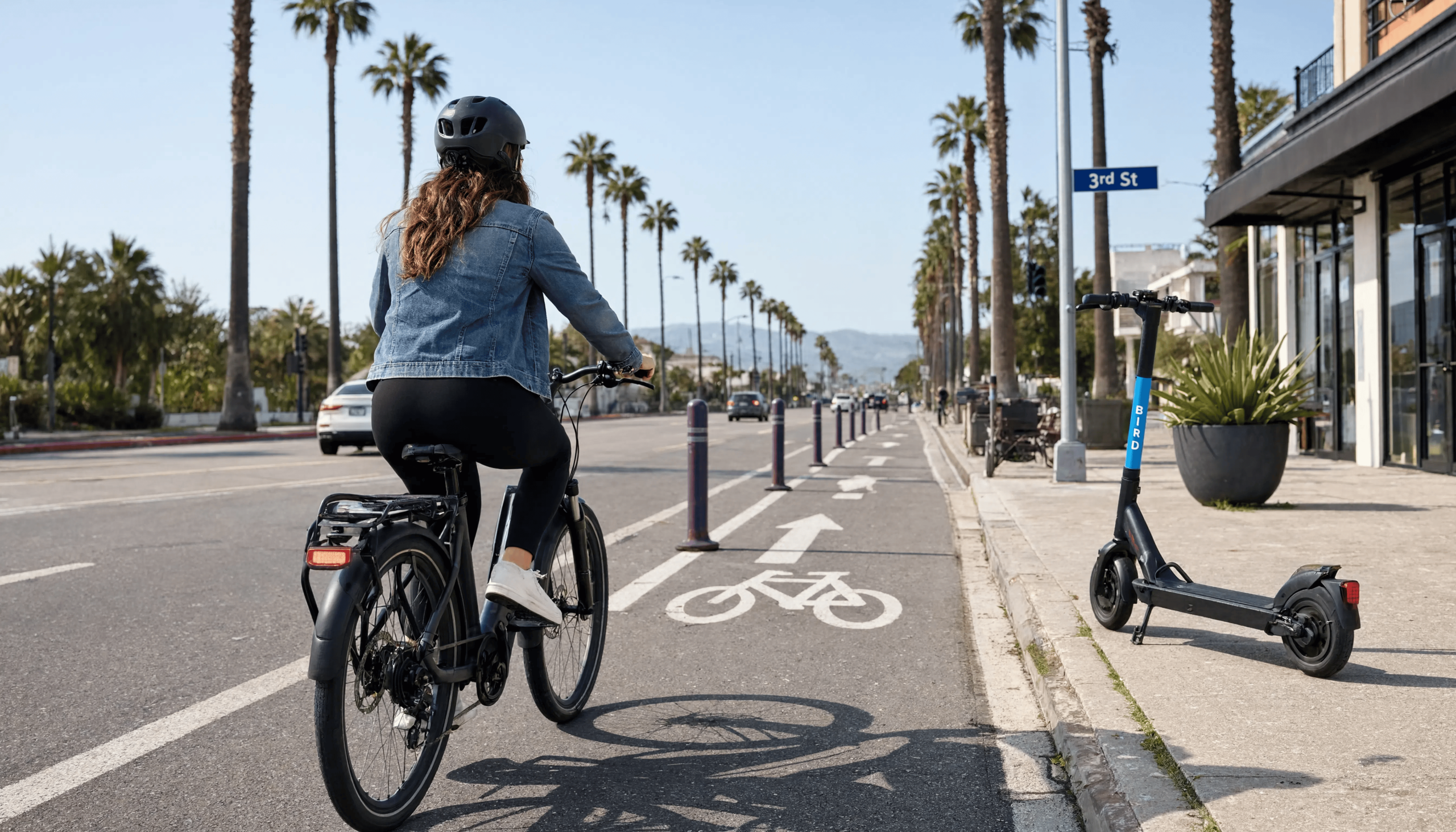
E-bikes and e-scooters are everywhere in California, and in 2026 the rules that govern them changed. Some updates are small; others can decide who is at fault after a crash. Here is a plain-English guide to what’s new – and what every rider should know to stay legal and protected.
The three-class system still applies
California sorts e-bikes into three classes (Vehicle Code §312.5): Class 1 (pedal-assist up to 20 mph), Class 2 (throttle up to 20 mph), and Class 3 (pedal-assist up to 28 mph, with a speedometer). A legal e-bike must have working pedals and a motor of 750 watts or less. Class 1 and 2 riders can be any age; Class 3 riders must be at least 16. Helmets are required for all Class 3 riders and for anyone under 18 on any class.
New for 2026: a rear light or reflector at all times
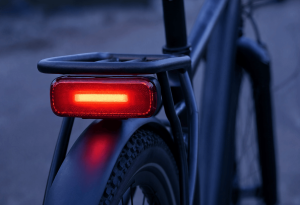
E-bikes must now have a rear red reflector, or a red rear light with a built-in reflector, visible from 500 feet — during the day as well as at night. Previously the rule applied only after dark. Visibility disputes are common in bike-versus-car cases, so this small piece of equipment can matter a great deal.
New for 2026: battery safety certification
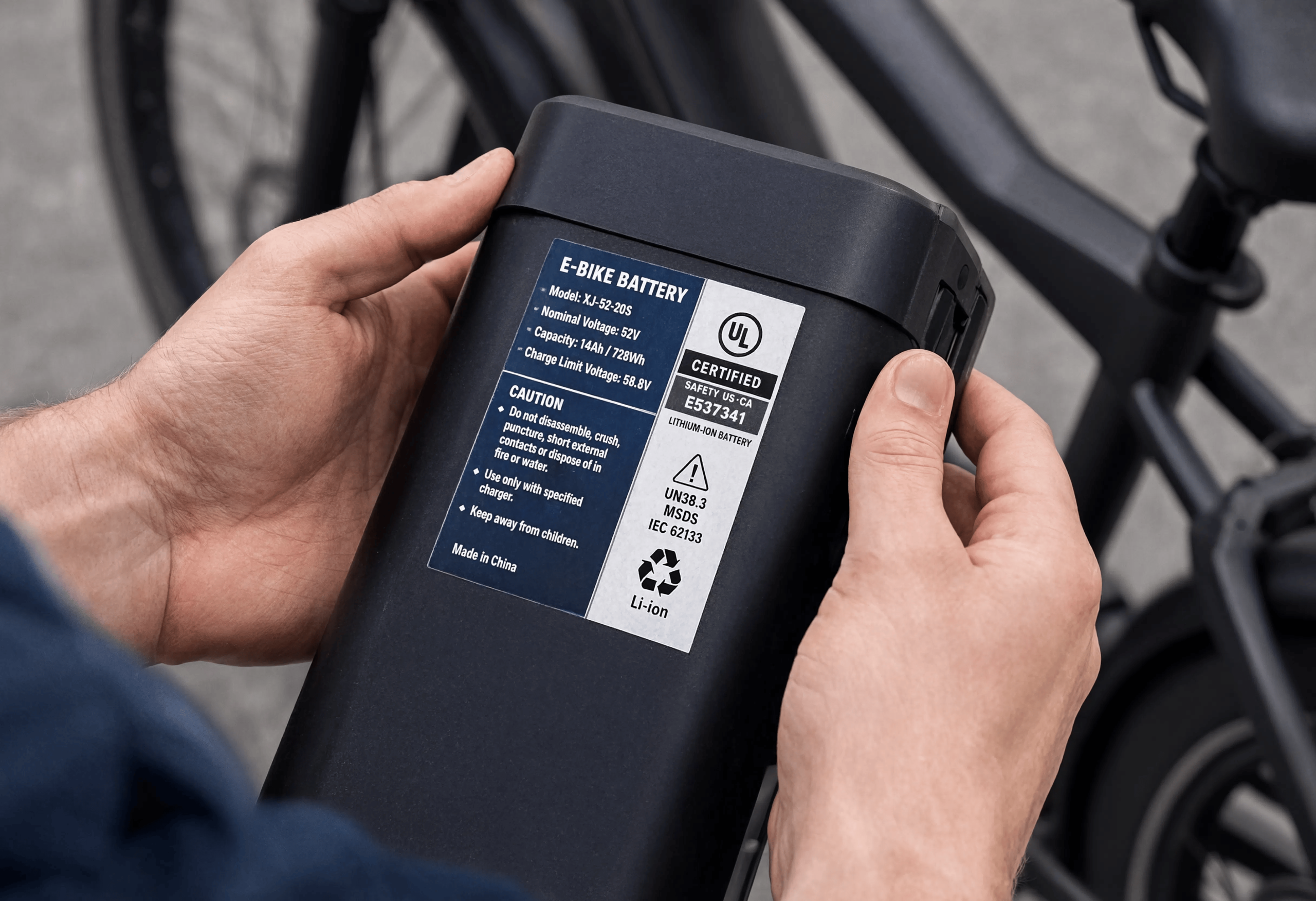
Under Senate Bill 1271, e-bikes, e-scooters, batteries, and chargers sold or leased in California must now be tested and certified by an accredited lab (look for UL 2849 on bikes and chargers and UL 2271 on batteries) and clearly labeled. The law targets the fire risk from cheap, uncertified lithium-ion batteries. It applies to new sales; rental fleets have until 2028 to comply. You don’t have to replace a battery you already own, but a questionable replacement pack is both a safety hazard and a potential liability issue.
Modifying your bike can change what it legally is
If a device is altered to exceed 750 watts or its class speed, or its pedals are removed, it may no longer qualify as an e-bike — it can become a moped or motorcycle, which triggers a license, registration, insurance, and plates. New for 2026, officers also have authority to impound certain over-powered devices ridden without a license, and Class 3 e-bikes ridden by anyone under 16. It is now illegal to sell or advertise a device as an “electric bicycle” if it doesn’t meet the legal definition.
E-scooters follow different rules
Stand-up e-scooters are treated more strictly. Riders need a valid driver’s license or permit, must be at least 16, are capped at 15 mph, and may not ride on sidewalks — use the bike lane, or a road posted at 25 mph or less. Helmets are required under 18. You can be charged with DUI on a scooter just as in a car, and local cities routinely add their own limits, so check before you ride.
Why the rules matter if you’re hurt
California’s comparative-fault rule means your own conduct affects your recovery. A rider who was wearing a helmet, using lights, staying in the proper lane, and riding sober is in a much stronger position than one who wasn’t — and following the law can directly increase what you recover. When a defective battery or bike causes a fire or a crash, a product-liability claim against the maker or seller may also be available.
Helpful Resources & Links
 California DMV – Motorcycles, Mopeds & Scooters
California Highway Patrol – Motorcycles & Similar Vehicles
Ellin Mardirosian Law – Pedestrian Accidents in California (related reading)
Ellin Mardirosian Law – Practice Areas
Ellin Mardirosian Law – Free Consultation
Speak With Ellin Mardirosian Law
Injured? Your consultation is free and confidential. Call (747) 310-5200 – English, Spanish, and Armenian. No fee unless we win.