





A slip, trip, or fall can cause serious, lasting injuries – but a property owner is not automatically responsible just because you were hurt on their premises. California law asks a specific question: did the owner act reasonably to keep the property safe? Here’s when the answer makes them legally liable.
The duty every property owner owes
In California, property owners and occupiers owe a duty of reasonable care to keep their premises reasonably safe for people who are lawfully there. The state long ago replaced the rigid old categories of visitor with a single, flexible negligence standard, so the focus is on what a reasonable owner would have done under the circumstances.
What you actually have to prove
A premises case has four parts: the owner owed a duty, breached it, and that breach caused your injuries and damages. The pivotal issue is usually notice – you generally must show the owner knew, or through reasonable inspection should have known, about the dangerous condition and had time to fix it or warn. You don’t always need proof of exactly how long a spill sat there; circumstantial evidence that a reasonable inspection would have caught it can be enough.
Common hazards that lead to claims
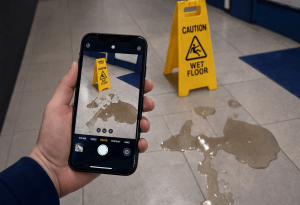
Typical cases involve wet or slippery floors, spills left unattended, uneven or broken pavement and stairs, missing handrails, poor lighting, and cluttered walkways. Inadequate security can also give rise to a claim when a foreseeable assault occurs because a property was left unreasonably unsafe.

Comparative fault: the insurer’s favorite argument
California reduces your recovery by your own share of fault. Expect the property’s insurer to argue you weren’t watching where you were going, ignored a warning, wore unsafe footwear, or entered an area that was clearly closed off. An obvious hazard can limit a claim, but it rarely bars one outright – being partly at fault does not end your right to recover.
Who can be responsible
Depending on the facts, a business, landlord, property manager, or homeowners’ association may be liable – and so may a government entity when the dangerous condition is on public property. Public-entity claims follow special rules and much shorter deadlines.
Deadlines and evidence
You generally have two years to file a premises claim in California – but if government property is involved, you may have as little as six months to file an administrative claim first. Evidence vanishes fast: spills get cleaned and security video is often overwritten within days. Report the incident, get the report, photograph the scene, keep your footwear, and see a doctor promptly.
Helpful Resources & Links
 California Courts – Civil Lawsuits (Self-Help)
California Courts – Find Your Self-Help Center
Ellin Mardirosian Law – The Hidden Costs of Serious Injuries
Ellin Mardirosian Law – When Insurance Companies Challenge Liability
Ellin Mardirosian Law – Practice Areas
Ellin Mardirosian Law – Free Consultation
Speak With Ellin Mardirosian Law
Injured? Your consultation is free and confidential. Call (747) 310-5200 – English, Spanish, and Armenian. No fee unless we win.